
SEBI's New Regulatory Reporting Framework for AIFs: QAR Reforms and the Annual Activity Report Explained (2026 Update)
By Parth Gala & Aryan Gupta · 2026-03-18
India's Alternative Investment Fund industry has crossed an inflection point. With capital flowing into startups, private companies, infrastructure projects, and increasingly sophisticated investment structures, the regulatory reporting framework that once worked for a nascent industry was no longer adequate for the scale and complexity of today's AIF ecosystem. SEBI's response—a comprehensive circular dated 4 March 2026—fundamentally redesigns how AIFs disclose their operations, capital flows, and investor composition to regulators.
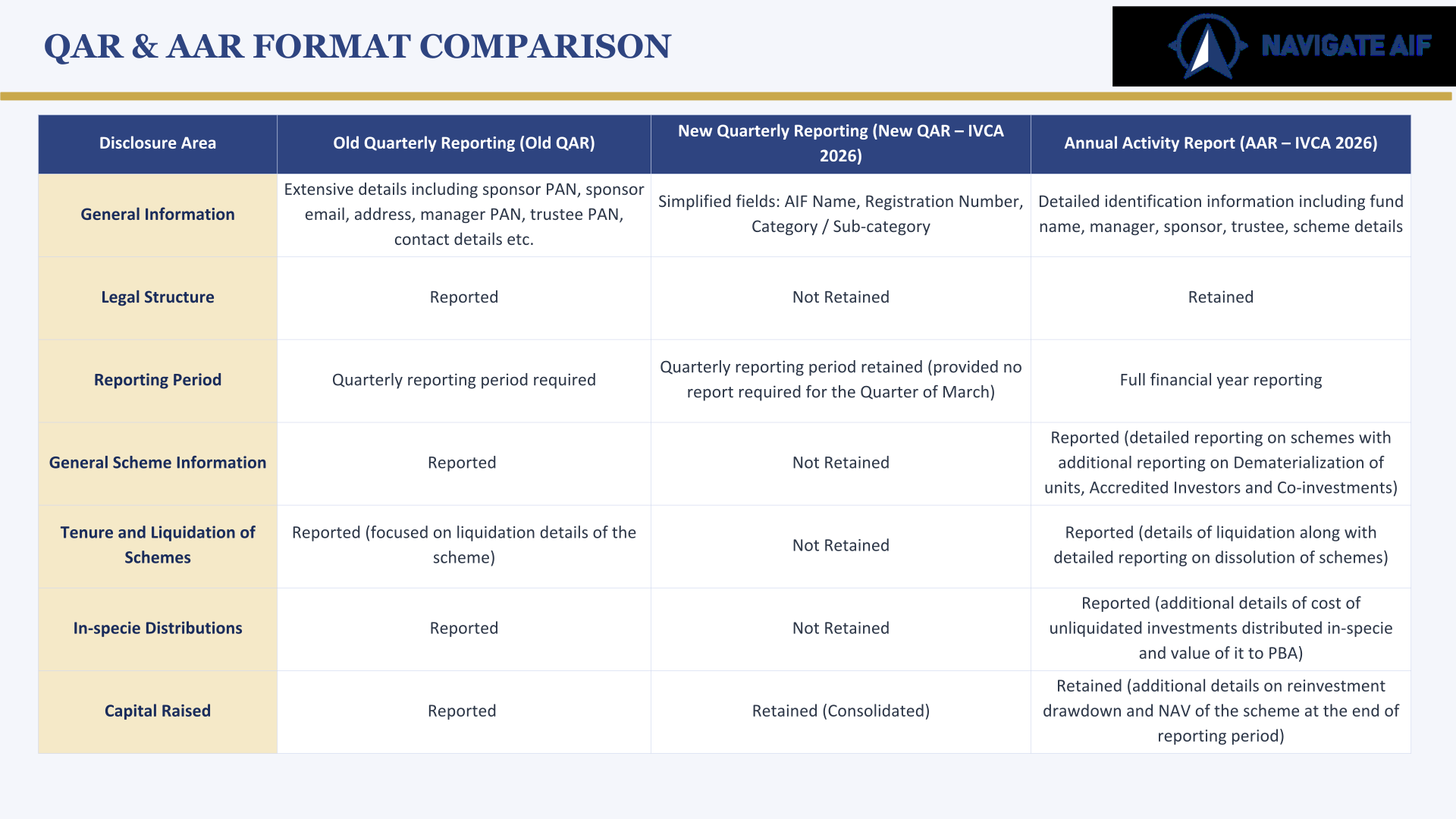
The new framework, operationalized through revised reporting formats released by the Indian Venture and Alternate Capital Association (IVCA) on 5 March 2026, introduces a two-report structure: a streamlined Quarterly Activity Report (QAR) focused on essential operational data, and a new Annual Activity Report (AAR) capturing comprehensive year-end disclosures. Together, these reports replace a fragmented and repetitive earlier framework that had long drawn criticism from fund managers for its inconsistency, duplication, and misalignment with international PE/VC standards.
Why the Earlier Reporting Framework Had to Change
The Problem with the Old QAR Structure
The previous reporting framework suffered from several structural deficiencies that reduced its value for both regulators and fund managers:
- Data duplication and repetition across sections increased compliance burden without improving regulatory insights
- Inconsistent and incomplete filings with blank fields and non-uniform value reporting made industry-wide analysis unreliable
- Misalignment with global PE/VC standards on capital commitments, drawdowns, portfolio data, and investor composition
- Incomplete lifecycle reporting with inadequate coverage of capital recycling, reinvestment activity, and scheme-level exit data
- Absence of standardized investor categories and sector classifications, limiting the ability to track capital flows across the AIF ecosystem
The Regulatory Imperative
As the AIF industry has grown into a significant channel for private capital allocation, the limitations of the earlier framework became untenable. Regulators need accurate, structured, and comparable data to monitor industry trends, enforce compliance, and formulate policy. The revised QAR and AAR formats are SEBI's answer to this structural gap—simplifying reporting while significantly improving depth and quality of disclosures.
The Two-Report Architecture: Understanding the New Framework
Quarterly Activity Report (QAR) — Streamlined and Essential
The revised QAR narrows its focus to the most operationally relevant information on a quarterly basis:
- Investor details and fund classification at the scheme level
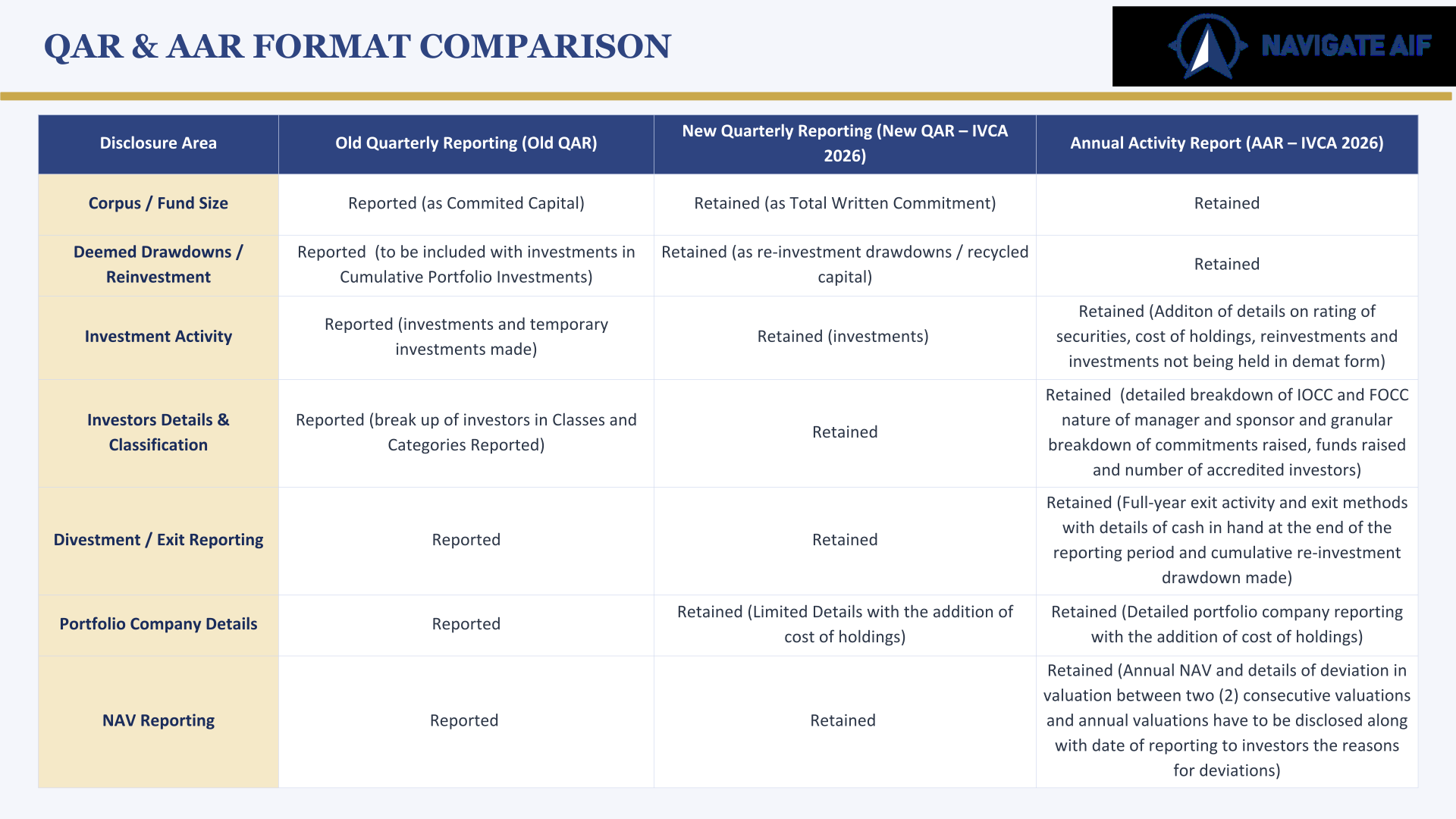
- Corpus, commitments, and drawdown data including reinvestment drawdowns
- Scheme-level investment activity for the reporting period including investments made, exits, and distributions
- Portfolio holdings and valuations to give regulators real-time visibility into capital deployment
- Sponsor and Investment Manager regulatory status disclosures
Annual Activity Report (AAR) — Comprehensive Year-End Disclosure
The AAR is an entirely new reporting construct that captures everything the QAR does not:
- Full financial year lifecycle activity consolidating capital, investment, exit, and distribution data
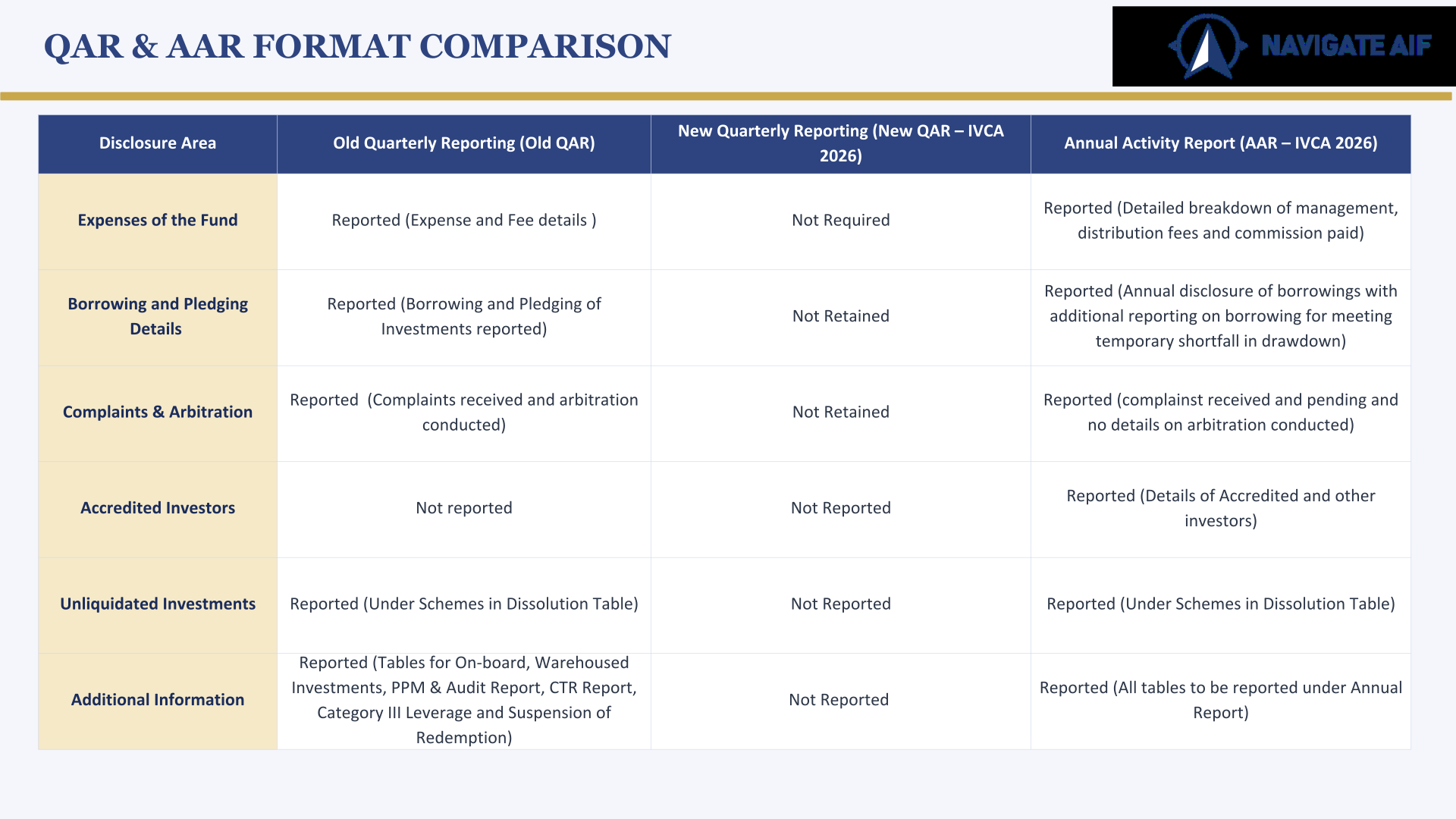
- Borrowings undertaken by the fund with scheme-level details and contextual disclosures
- Management fees during dissolution, distribution fees in absolute monetary terms, and fee structure transparency
- Securities held in physical form as part of the broader dematerialisation compliance push
- Accredited investor identification within the fund's investor base
Critical structural note: Because the AAR now captures comprehensive year-end data, the quarterly reporting requirement for the quarter ending 31 March has been removed. The AAR substitutes for the Q4 QAR filing entirely.
Key Changes in the Revised QAR Format
Granular Scheme-Level Capital and Investment Tracking
The revised QAR mandates detailed scheme-level disclosures that were either absent or insufficiently structured in the earlier format:
Capital Reporting:
- Committed capital, drawdowns, and remaining drawable corpus per scheme
- Separation of gross cumulative funds raised from reinvestment drawdowns
- Deemed drawdowns reported in a dedicated column for clear capital recycling visibility
Investment Activity Reporting:
- Investments made during the quarter
- Exits completed and distributions to investors
- Portfolio holdings with current valuations
This granularity allows regulators to track deployment pace, monitor exit trends, and obtain real-time visibility into how capital is moving through individual AIF schemes—information that was previously difficult to extract from aggregated filings.
Streamlining Quarterly Filings: Less Repetition, More Value
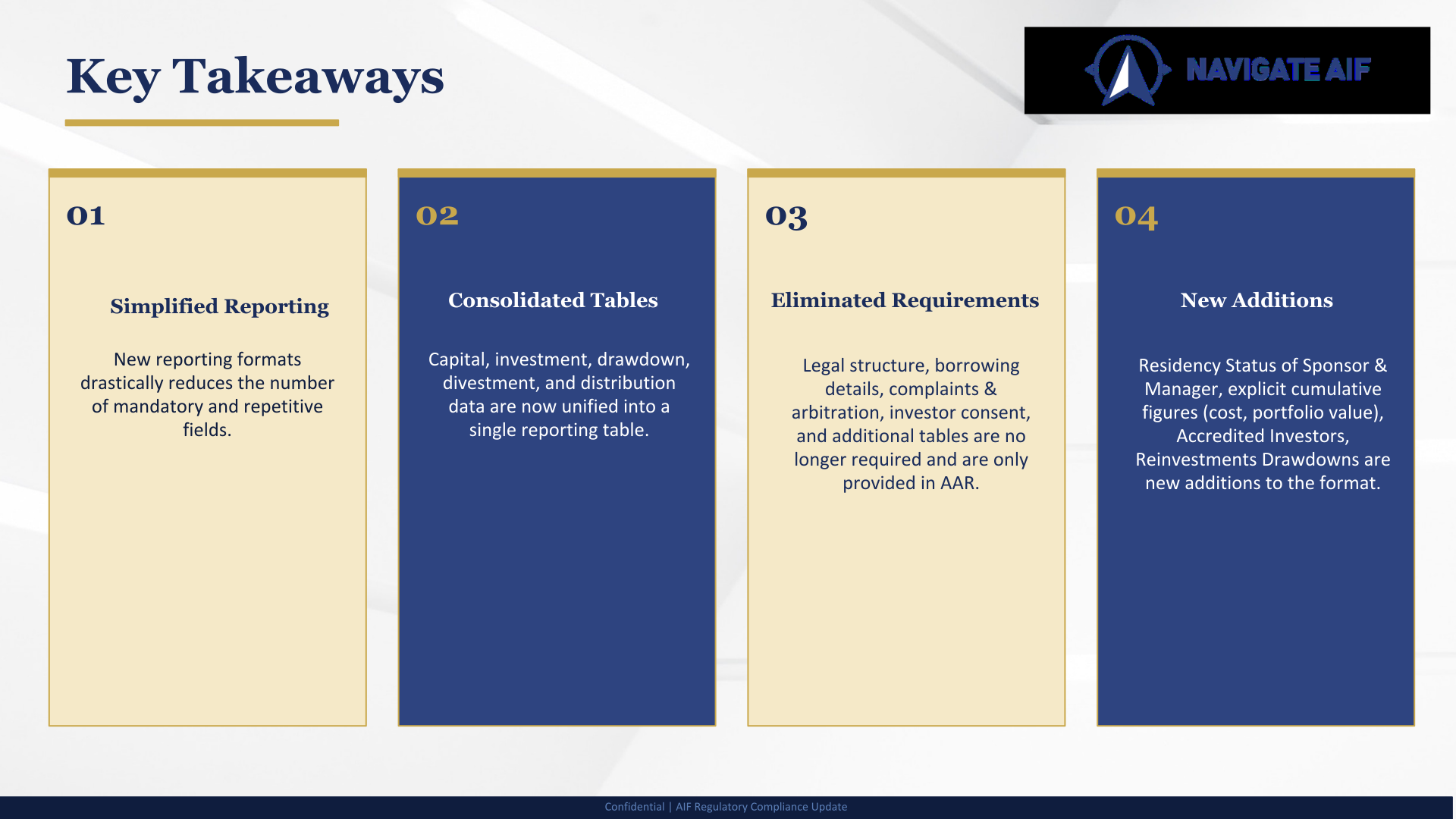
One of the most significant operational changes for fund managers is the removal of several granular disclosures previously required on a quarterly basis. The revised format retains only the most essential operational data—investor details, fund classification, corpus, commitments, and key activity metrics—eliminating the repetitive sections that added compliance cost without regulatory benefit.
For compliance teams, this means:
- Reduced administrative burden on a per-quarter basis
- Cleaner, more consistent filings with less scope for incomplete or inconsistent data
- Elimination of the Q4 QAR through the introduction of the AAR
Deemed Drawdowns and Reinvestment Activity Disclosures
A notable new requirement in the QAR is the mandatory disclosure of reinvestment drawdowns, including deemed drawdowns. This covers scenarios where:
- Capital is recycled within a scheme without being distributed to investors and recalled
- Such recycled capital is categorized as a "deemed drawdown" and reported separately from gross cumulative funds raised
This disclosure is particularly significant for funds that rely on capital recycling strategies to maximise investment capacity. Regulators can now:
- Identify funds that actively use reinvestment provisions
- Understand actual patterns of capital deployment beyond initial drawdowns
- Monitor the extent and nature of capital recycling across the industry
Sponsor and Investment Manager Regulatory Status
AIFs must now disclose the regulatory and residency classification of their Sponsor and Investment Manager. The prescribed categories are:
- DOCC — Domestic Owned and Controlled Resident Non-Individual
- FOCC-R — Foreign Owned and Controlled Company Non-Individual (Resident)
- FOCC-NR — Foreign Owned and Controlled Company Non-Individual (Non-Resident)
- Resident Entity
- Non-Resident Entity
This disclosure gives regulators clearer visibility into ownership and control structures within the AIF ecosystem, particularly relevant for funds with foreign ownership or control, and assists in monitoring compliance with applicable foreign investment regulations.
Key Changes in the Annual Activity Report Format
Borrowings Undertaken by the Fund
The AAR consolidates all borrowing disclosures that were previously reported on a quarterly basis. This shift reflects the relatively infrequent and exceptional nature of AIF borrowings, which are generally permitted only for temporary funding needs under the regulatory framework.
The AAR now captures:
- Whether any borrowings were undertaken during the financial year
- Scheme-level details of such borrowings
- Purpose-specific context: borrowings to meet temporary shortfalls, proposed investment amounts, commitment pending from non-defaulting investors, and to whom the cost of borrowings is charged
This level of contextual disclosure helps regulators assess whether funds are complying with the borrowing limits prescribed under the AIF Regulations and monitor the use of bridge financing arrangements.
Management Fees During the Dissolution Period
A compliance-sensitive addition to the AAR is the requirement to disclose the percentage of management fees charged during the dissolution period, if any. This must be read alongside the SEBI Circular dated 26 April 2024, which prohibits the charging of fees after a fund enters the dissolution phase. Fund managers should note that this reporting requirement may create regulatory scrutiny around any fee charges that arise during wind-down, and robust documentation of the basis for any such charges will be important.
Absolute Disclosure of Distribution Fees
For investors on-boarded after 1 May 2023, the AAR requires funds to disclose distribution fees in absolute monetary terms. This includes payments made to:
- Distributors and placement agents
- Other intermediaries involved in capital raising
By requiring disclosure in absolute amounts rather than percentages, the framework improves transparency around fundraising costs and allows regulators to assess whether distribution-related expenses are reasonable and consistent with market practice.
Physical Securities Disclosure
In alignment with SEBI's broader dematerialisation push, the AAR requires funds to identify any securities held in physical form rather than dematerialised form. While most securities are now held electronically, legacy investments may still exist as physical certificates. This disclosure enables regulators to:
- Identify investments that have not transitioned to demat form
- Assess associated operational and custody risks
- Monitor potential delays in transfers or exits arising from physical holdings
- Encourage alignment with the broader regulatory objective of universal demat holding
Consolidated Fund Lifecycle Reporting
The AAR brings together in a single annual filing the full picture of a fund's activities during the financial year—capital commitments, drawdowns, investments made, portfolio exits, and distributions to investors. This consolidation is significant because it gives regulators a comprehensive, comparable view of AIF operations year-on-year, enabling better trend analysis and more effective supervisory oversight across the private markets ecosystem.
Accredited Investor Disclosure
A new requirement unique to the AAR is the identification and reporting of investors who qualify as accredited investors under SEBI's framework. This reflects the growing participation of sophisticated investors in AIFs and their entitlement to specific regulatory relaxations and flexibility.
By mandating this disclosure, SEBI can:
- Better understand the composition of the investor base across AIFs
- Monitor how accredited investor benefits are being utilised within the industry
- Track the growth of sophisticated investor participation in private markets over time
What This Means for AIF Fund Managers: Practical Implications
Compliance Calendar Changes
The structural shift from a pure quarterly reporting model to a QAR + AAR framework has direct implications for fund managers' compliance calendars:
- Quarterly filings (Q1, Q2, Q3): Revised QAR format with streamlined scope
- Q4 filing replaced: The AAR substitutes the March-quarter QAR entirely
- AAR timeline: Fund managers should plan for a more comprehensive year-end exercise covering borrowings, fee disclosures, physical securities, lifecycle activity, and accredited investor identification
Data Architecture Upgrades Required
The new reporting framework requires fund managers and their technology platforms to capture data points that were either not previously tracked or not tracked in the structured manner now required:
- Deemed drawdown and reinvestment activity tracking at the scheme level
- Sponsor and Investment Manager classification fields
- Distribution fee amounts in absolute monetary terms for post-May 2023 investors
- Physical securities inventory across all portfolio holdings
- Accredited investor flags in the investor database
Alignment with Global Standards
The revised framework brings India's AIF reporting meaningfully closer to internationally recognised PE/VC reporting standards that capture structured data on capital commitments, drawdowns, portfolio investments, and investor composition. For fund managers with LP bases that include global institutional investors, this alignment reduces the disconnect between India-specific regulatory filings and the international reporting formats their investors are accustomed to.
Future Outlook: Where AIF Reporting is Headed
Towards Data-Driven Regulation
SEBI's overhaul of the AIF reporting framework is consistent with a broader regulatory trend towards data-driven supervision of the private markets. Structured, granular, and standardised data enables regulators to build industry dashboards, run systemic risk assessments, and identify compliance outliers far more effectively than manually reviewed narrative filings.
Technology as a Compliance Imperative
For AIFs operating at scale, the revised reporting requirements underscore the importance of purpose-built compliance technology. Manual processes and spreadsheet-driven workflows are increasingly inadequate for the data aggregation, validation, and structured output generation that the new QAR and AAR formats demand. Integrated fund accounting, portfolio management, and regulatory reporting platforms are no longer a luxury—they are a compliance necessity.
Expanding Disclosure Scope
The introduction of accredited investor disclosure and physical securities reporting signals that SEBI will continue to expand the informational scope of AIF filings as the industry matures. Fund managers should anticipate further granular disclosure requirements in subsequent reporting cycles, particularly around ESG metrics, co-investment structures, and cross-border capital flows.
Conclusion: A More Mature Reporting Regime for a Maturing Industry
SEBI's March 2026 circular and the IVCA's revised reporting formats represent a meaningful step-change in the quality, structure, and depth of information that AIFs provide to regulators. The move from a single, repetitive quarterly report to a focused QAR supplemented by a comprehensive AAR reflects a more sophisticated understanding of the AIF lifecycle and the different types of oversight that quarterly monitoring and annual review serve.
For fund managers, the revised framework delivers a more balanced trade-off between compliance burden and regulatory value:
- Streamlined quarterly filings with reduced duplication and elimination of the Q4 QAR
- Comprehensive annual disclosures covering borrowings, fees, physical securities, lifecycle activity, and accredited investors
- Standardised data fields that reduce inconsistency and improve the quality of submissions
- Global alignment bringing India's AIF reporting closer to international PE/VC standards
- Technology imperative underscoring the need for integrated compliance and reporting infrastructure
As India's private capital markets continue to grow in scale and sophistication, the regulatory reporting framework must evolve with it. SEBI's March 2026 overhaul lays the foundation for a more transparent, data-rich, and internationally aligned AIF ecosystem—one where regulators, fund managers, and investors all benefit from better information.
This analysis is based on SEBI's circular dated 4 March 2026 and the IVCA reporting formats released on 5 March 2026, and is intended for informational purposes only. It should not be construed as legal or compliance advice. Fund managers should consult their legal and compliance advisors before implementing any changes to their reporting processes.
Looking to streamline your QAR and AAR filings under the revised framework? Contact Navigate AIF to learn how our AI-native compliance platform automates SEBI-aligned regulatory reporting for AIFs—from data capture to structured submission.
Related Topics:
- Complete Guide to Quarterly Activity Report (QAR) Filing for AIFs
- SEBI's Accredited Investor Framework: What AIF Managers Need to Know
- Fund Accounting and Reporting Automation for Alternative Investment Funds
Tags: #SEBIAIFReporting #AIFRegulatoryReporting #QuarterlyActivityReport #AnnualActivityReport #SEBICircular2026 #AIFCompliance #IVCAReportingFormat #AlternativeInvestmentFunds #NavigateAIF